
10 Questions Missouri Valley Homeowners Should Ask a Plumber Before Signing a Flooring-Adjacent Contract
September 3, 2026
Before any plumber touches your floors in the Kansas City metro area, these ten questions will separate the pros who coordinate trades from the ones who create expensive surprises.
10 Questions Missouri Valley Homeowners Should Ask a Plumber Before Signing a Flooring-Adjacent Contract
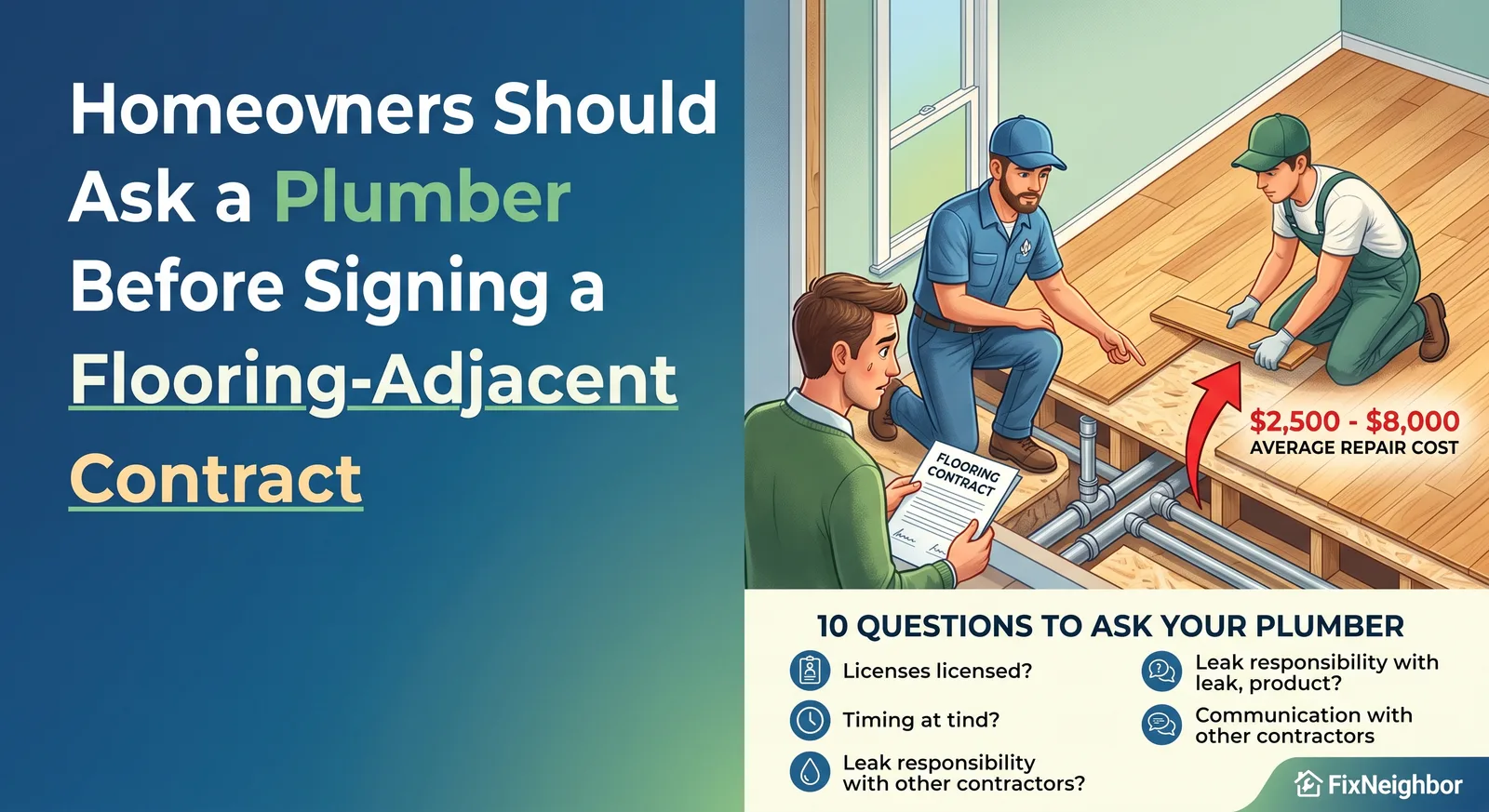
A burst pipe discovered after new hardwood floors are installed costs the average homeowner $2,500 to $8,000 in combined water damage and flooring replacement, according to the Insurance Information Institute (2026). That number climbs fast when the plumber and the flooring contractor never talked to each other before work started.
If you're planning any renovation in the Kansas City metro area that touches both plumbing and flooring in the same space, the plumber you hire needs to answer these ten questions before you sign anything.
1. Are you licensed in Missouri, and can I verify your license number today?
Missouri requires plumbers to hold a state-issued license through the Division of Professional Registration. Ask for the license number on the spot and cross-check it at pr.mo.gov. A contractor who hesitates is a contractor worth skipping.
2. Have you worked on projects where flooring installation followed your plumbing work within 30 days?
This is the sequencing question most homeowners forget. Concrete subfloors need 28 days to cure after a floor drain is set. If your flooring crew shows up on day 10, you'll have moisture problems under your new tile within a year. A plumber who has coordinated this before will know the timeline without being prompted.
3. What is your process for protecting existing flooring during rough-in or repair work?
Ask for specifics: Do they use Ram Board or rosin paper? Do they tape seams? Do they carry their own floor protection materials or expect you to supply them? Vague answers here usually mean scratched hardwood or cracked tile on your invoice.
4. Will you provide a written scope of work that references the flooring installation schedule?
A verbal agreement that the plumber will "be done before the floors go in" is not enforceable. The written scope should name the flooring contractor, list the date plumbing rough-in must be complete, and specify who is responsible if a delay pushes the flooring crew back.
5. How do you handle subfloor penetrations, and who patches them?
Every drain line, supply line, and waste stack that passes through a subfloor leaves a gap. Gaps left open invite pests and moisture. Some plumbers patch their own penetrations with fire-rated caulk or hydraulic cement; others leave it to the GC. Know which category your plumber falls into before work starts, not after.
6. What is your policy if a leak is discovered after flooring is installed?
This is the liability question. Get the answer in writing. A reputable plumber will carry general liability insurance (minimum $1 million per occurrence is standard in Missouri) and will specify in the contract that any leak attributable to their work is their financial responsibility, including flooring repair costs.
7. Do you pull permits for this type of work, and who inspects it?
In Kansas City, Missouri, any new drain installation or significant supply-line relocation requires a permit from the Kansas City Permit Center. Unpermitted plumbing work voids homeowner's insurance claims and creates title problems when you sell. If a plumber suggests skipping the permit to save time, that is a disqualifying answer.
8. Can you give me a fixed price, or is this time-and-materials?
Time-and-materials contracts put all the cost risk on you. For flooring-adjacent plumbing work, where delays cascade into flooring contractor rescheduling fees, a fixed-price contract is the safer structure. If the plumber insists on T&M, ask for a written not-to-exceed cap.
9. Who are the two most recent customers I can call who had a similar project?
References from five years ago are nearly useless. You want someone who hired this plumber in 2025 or 2026 for a bathroom remodel or kitchen renovation where flooring was also being replaced. Call both references. Ask specifically whether the plumber finished before the flooring crew arrived.
10. How do you coordinate with flooring contractors you haven't worked with before?
Most flooring disasters happen at the handoff between trades, not during either trade's individual work. A plumber who has a clear answer ("I call the flooring contractor directly, confirm my finish date, and leave a written sign-off on the subfloor") is worth paying a premium for. One who says "that's not my problem" is telling you exactly what your project will look like.
Where FixNeighbor fits into this process
Finding a plumber who can answer all ten of these questions confidently is harder than it sounds in the Missouri Valley. FixNeighbor's platform pre-screens licensed plumbers in the Kansas City metro area, surfaces upfront fixed pricing before you commit, and keeps payment in escrow until the work passes your review. When you start a project through FixNeighbor's AI-powered chat, you can specify that the job is flooring-adjacent and the system will match you with pros who have documented experience coordinating with flooring crews, not just plumbers who happen to be available.
The alternative is posting in a Facebook group, getting twelve responses in four hours, and spending a weekend trying to verify licenses and call references yourself. That process works, but it puts the vetting burden entirely on you at the exact moment you're already managing a renovation.
Before you sign any contract for plumbing work tied to a flooring project, run through these ten questions with every candidate. If a plumber can't answer questions 1, 6, and 7 without hesitation, move on. If you want a shortlist of vetted Kansas City metro plumbers who already have answers to all ten, start at fixneighbor.com.